There's no shortage of conversation right now about what AI agents can do. But this week at Ai4, I focused on another important question: Do people trust them enough to use them for work that matters?
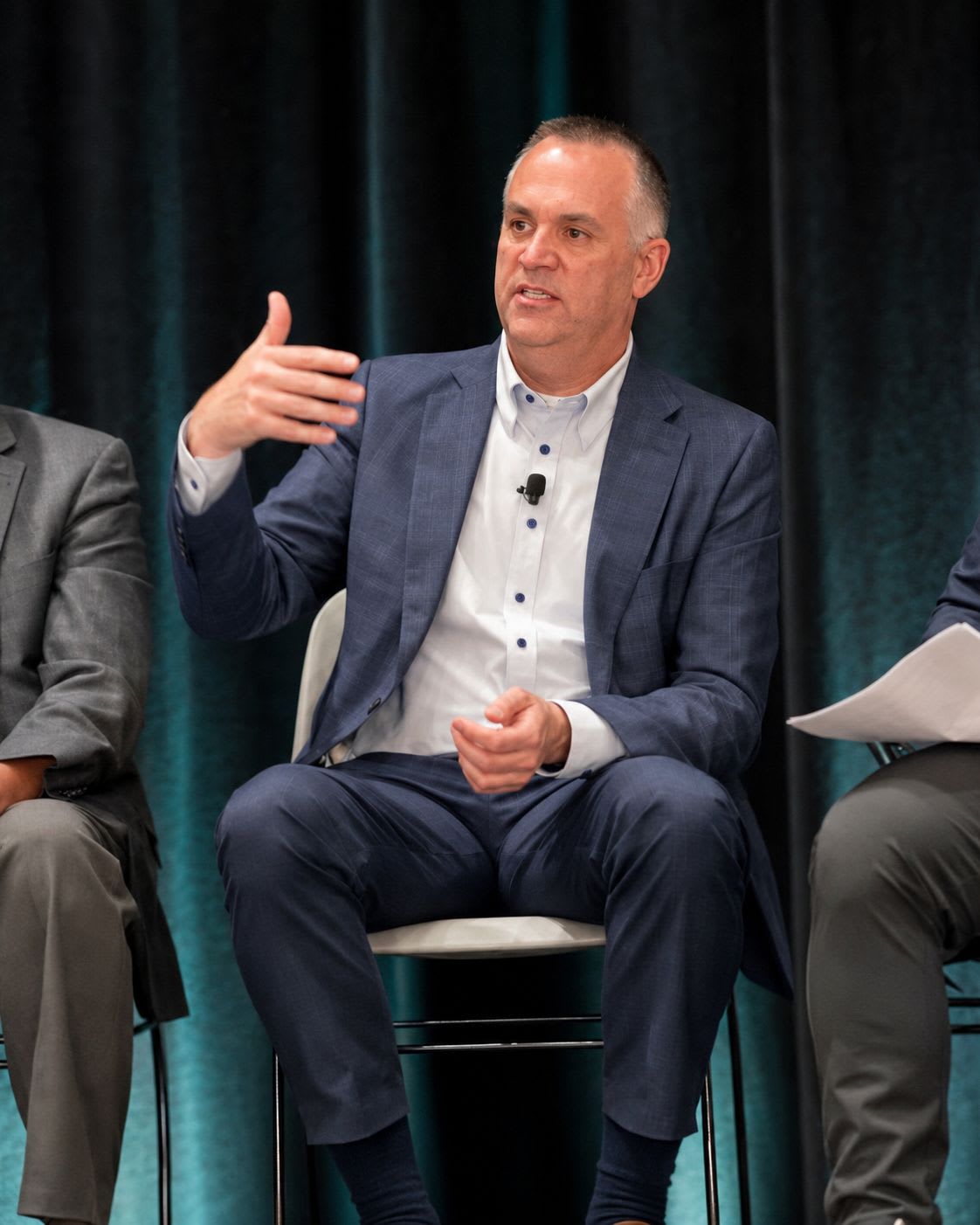
I got to participate on a great agentic AI panel and share some of what Expedient teams have been learning to deploy AI effectively inside our own organization. One idea kept surfacing. People don't automatically trust AI; as leaders, we must build their confidence by giving them a foundation and a path worth trusting.
That means experiencing how the technology works in their own roles. This idea has shaped how we approach AI at Expedient, and Blueprint, our new voice agent, is one way innovation that's helping us.
It All Starts with a Conversation
The idea behind Blueprint came from a common problem: "I know what I want to accomplish; I'm just not sure how to get there."
Blueprint helps work through this by asking questions first.
Who needs to be involved? What data matters? What could get in the way? And one of the most important, are we solving the right problem in the first place? Blueprint also identifies and interviews the stakeholders that need to be part of the process, ultimately bringing all the pieces of the business together.
AI Made It Faster, But Human Oversight Still Matters
Every year, our teams get between 2,000 and 3,000 vendor notifications, each one evaluated to understand impact, determine te appropriate maintenance windows, and communicate that back to clients. It used to take an engineer about two hours.
With an agent, it’s now about 40 seconds. Fast right? But while time savings are important, we need to be sure an expert is part of the process.
At Expedient, a senior engineer still reviews the outputs, questioning where needed, making changes, and deciding whether it’s ready to go. And this feedback typically improves what the agent produces next time.

Deployed Well, AI Agents Benefit into Every Part of Business.
In our sales organization, sales team now use AI agents to do a lot of the pre-sales homework before a meeting. That means researching the company, attendees, and the industry, then handing that information to the Expedient team who can prepare and dive deeper into what our clients really need.
After the meeting, agents can coach reps on what went well, what they missed, and where there are opportunities to improve. The team is still core to the process, just spending less time gathering info and more time doing something with it.
Giving people access to AI and getting them comfortable using it are two very different things.
Before asking employees to use anything, we opened up the Expedient AI CTRL Platform to the teams. With role-based access controls, administrator-managed data permissions, and dedicated compute, the permissions and security we in place so our team members would experiment with the AI. We asked them to build something for themselves: a fitness tracker, an app that looks at what’s in the refrigerator and suggests dinner, something useful, personal, and low stakes.
We want people to use the technology, get comfortable with it, and start imagining what is possible.
Maybe that means asking, “What annoys me about my job?” “What takes too long?” “What’s repetitive?” “What’s the problem I deal with that nobody has had time to fix?” After this, formal training makes more sense.
The Biggest Challenge May Not Be AI
There are still plenty of employees watching from the sidelines. Not necessarily because they don’t believe in AI, but because the pace of change can be intimidating. Leaders know they need a strategy they can trust.
And that’s why the foundation matters the most.